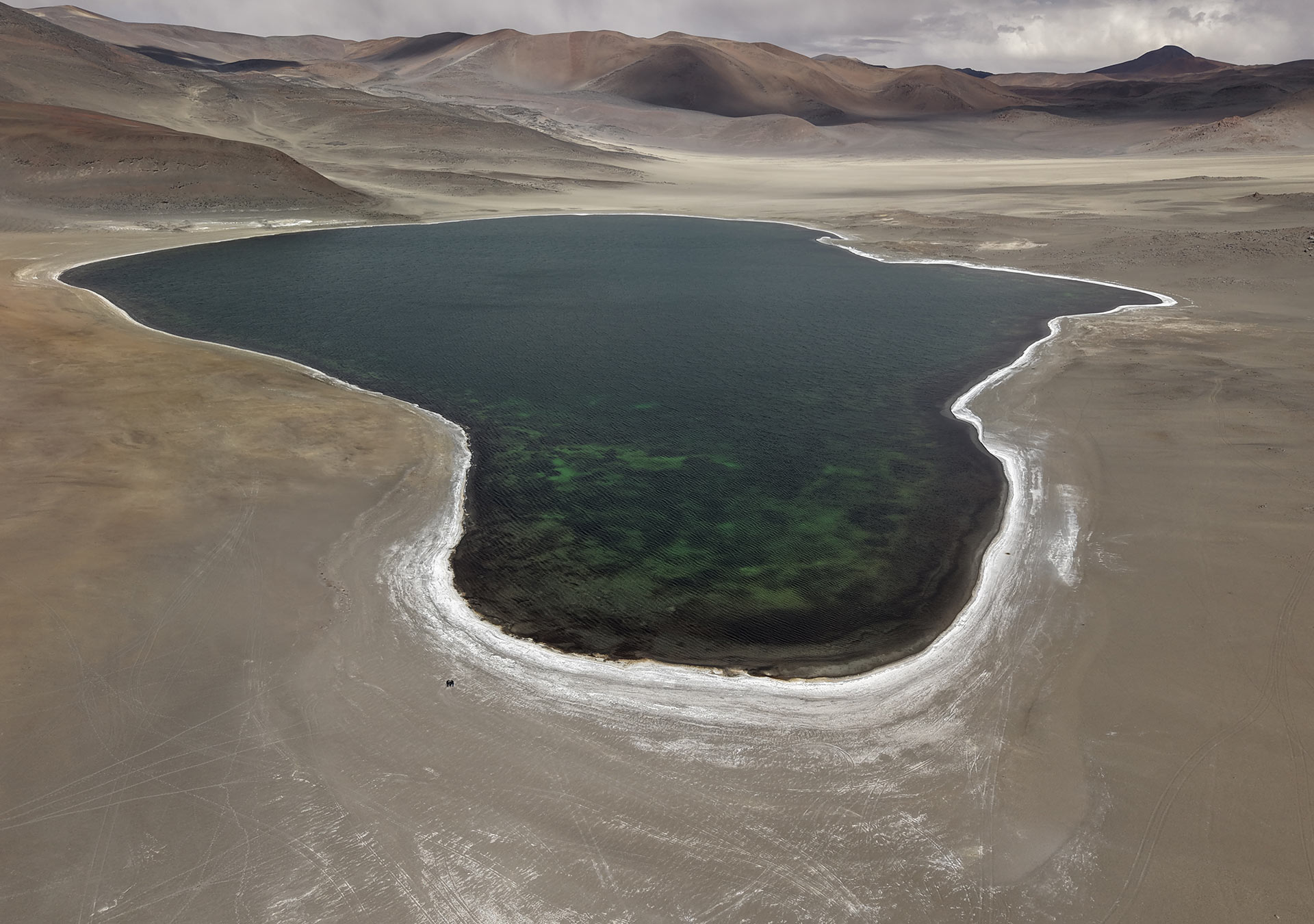
A Major Geothermal Region
Still Largely Untapped.
The Andean volcanic arc stretches 8,000 km along South America's spine, home to 200+ active volcanoes and an estimated 7,000 MW of geothermal potential. Less than 83 MW has ever been tapped.
A sleeping giant
about to wake.
The Andes sit above the Nazca Plate subduction zone, one of the most geologically active tectonic environments on Earth. Magma chambers, hydrothermal systems, and lithium-rich brines have been forming for millions of years.
Despite this, virtually all geothermal development has been concentrated in Iceland, Kenya, the Philippines, and New Zealand. South America's vast resource base remains almost entirely untouched. Until now.
Argentina alone is home to 39 active volcanoes — 13 of them in Catamarca, more than any other province in the country. Catamarca's own geothermal potential is estimated at 270 MW, enough to meet the electricity needs of roughly 200,000 households. VulEnergy's Lastarria concession sits at its core.
* Regional potential figures are estimates drawn from published industry and government sources. They describe the Andean arc as a whole, not VulEnergy's concession, and are not an estimate of the project's resources.
Earth's own heat,
captured and converted.
Continuous baseload capacity, available around the clock and independent of sun or wind.
Geothermal resources can support long-duration generation when responsibly managed and reinjected.
Underground operations, a compact surface footprint and a low-emissions generation process.
Evidence-backed,
well-positioned.
Thermal Anomaly
Surface temperature of 41°C at the lagoon edge, 30°C above regional baseline. Geophysical surveys confirm a shallow heat source.
Brine Chemistry
Lithium concentrations of 150+ mg/L in surface brines (samples LPS_03 through VLS_09). Magnesium-to-lithium ratio ideal for DLE processing.
Reservoir Indicators
Microseismic surveys and magnetotelluric profiling have identified a high-conductivity zone at a depth of 800–2,500 m, consistent with a hydrothermal reservoir.
Infrastructure Advantage
Highway access via Ruta Nacional 51, Belgrano Cargas C14 rail 40 km away, 98 km to the Socompa border crossing. Few Andean projects can match this logistics profile.
* Early-stage exploration results, internal to VulEnergy and pending independent verification. Sampling and survey figures do not constitute mineral resources or reserves under applicable disclosure standards.
Geothermal lithium.
A fundamentally different resource.
Conventional lithium production from evaporation ponds requires 12–24 months, consumes massive amounts of freshwater, and leaves a visible scar across otherwise pristine landscapes.
VulEnergy's Direct Lithium Extraction (DLE) technology is designed to extract lithium from geothermal brine in a cycle measured in hours, targeting recovery rates above 80% with a compact-footprint process that optimises water and material use and returns depleted brine to the reservoir in a closed loop.
The result is a pathway to lower-impact lithium production, from a source that also generates low-emissions electricity.
DLE vs. Evaporation
| Factor | Traditional Evaporation | VulEnergy DLE |
|---|---|---|
| Production time | 12–24 months | Hours |
| Water consumption | Very high | Substantially lower |
| Recovery rate | ~40–50% | 80–90%+ |
| Carbon footprint | High | Very low |
| Brine return | No | Yes (closed-loop) |
* Indicative comparison based on published industry literature and VulEnergy's target design parameters. Actual performance depends on pilot testing at Lastarria and has not yet been demonstrated at site.